
Houston’s sunlight has a personality all its own—bright, generous, and relentless. We feel it radiating off stadium seats at an afternoon game, glinting on the bayou after a thunderstorm, and filtering through the windshield on the 610 loop. Over years, that light leaves a record on our skin. As a local dermatologist, I’ve seen how cumulative sun exposure, mixed with heat, humidity, and outdoor lifestyles, shapes the full spectrum of skin changes from freckles to precancerous lesions and melanomas. If you have questions about a new mole, a changing spot, or simply want peace of mind, the smartest move is to partner with a meticulous dermatologist who understands how Gulf Coast living affects your risk and your routine.
Why Houston’s Climate Raises the Stakes
Our latitude, frequent bright days, and reflective surfaces—water, concrete, even light-colored buildings—create substantial UV exposure year-round. Add in weekend fishing trips, youth sports, and backyard barbecues, and you have countless moments of incidental sun. Many people are surprised to learn that UV penetrates clouds, and UVA travels through car windows. That’s why we see sun damage in drivers’ left arms and faces, even among those who rarely sunbathe. In darker skin tones, UV and visible light can trigger stubborn hyperpigmentation that hides early warning signs. Tailoring prevention and surveillance to Houston’s reality keeps you safer without forcing you indoors.
The Art and Science of a Full Skin Exam
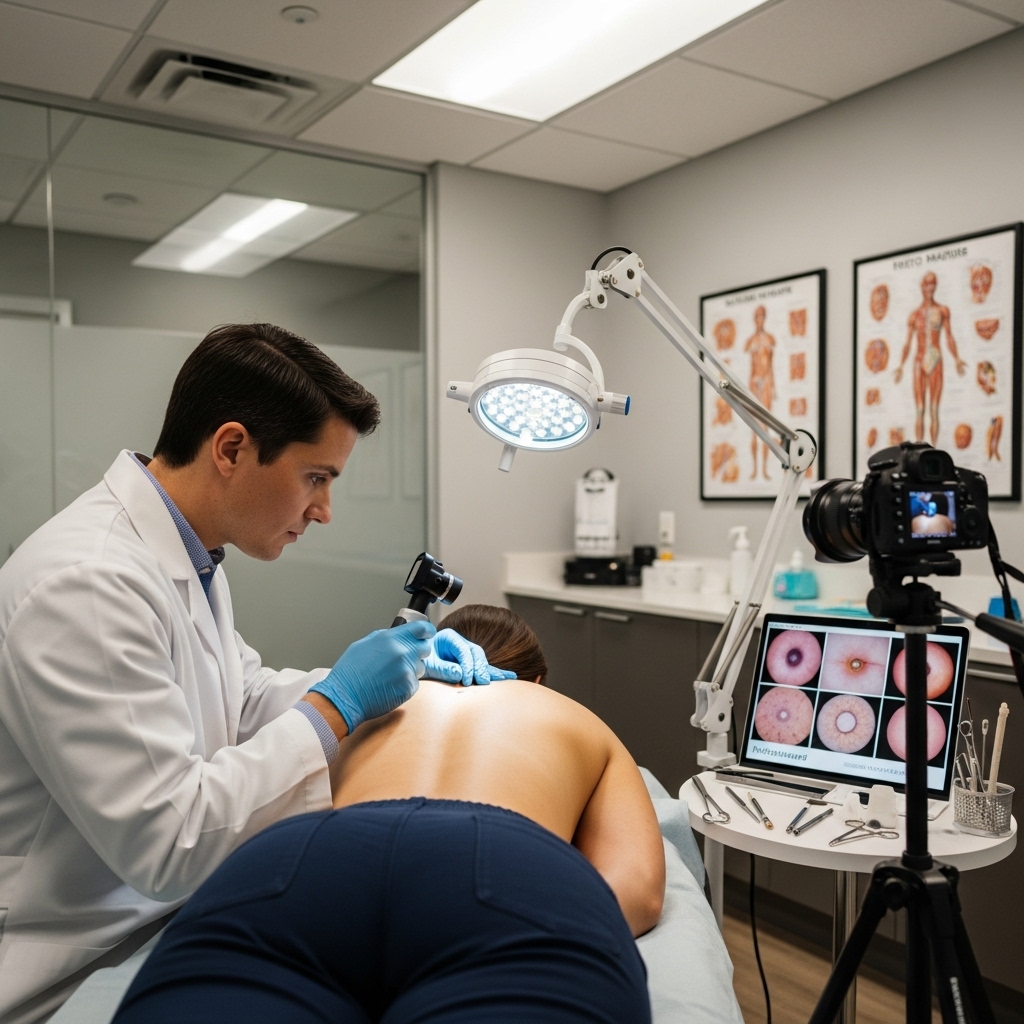
A comprehensive screening is more than a quick glance. We start with a detailed history, including sun habits, family history of skin cancer, past biopsies, and any immunosuppression. During the exam, I use dermoscopy—a magnified, polarized light—to analyze structures within moles and lesions that the naked eye can miss. This pattern analysis improves detection of melanoma and helps avoid unnecessary biopsies when a lesion is clearly benign. We examine the entire skin surface, including scalp, ears, under nails, soles, and between toes, because cancer can arise in unexpected places. For anyone with many moles, atypical nevi, or a history of melanoma, we may create a mole mapping plan with photographs to track change over time.
Understanding Moles: What’s Normal and What’s Not
Moles, or nevi, are common and usually harmless clusters of pigment cells. What matters is stability. The classic ABCDEs—Asymmetry, Border irregularity, Color variation, Diameter larger than a pencil eraser, and Evolution—still guide us, but dermoscopy adds nuance by revealing patterns like network symmetry, dots, streaks, and regression. Some moles naturally look different in darker skin; others on the scalp can be tricky to monitor without regular checks. When a lesion’s story doesn’t match its appearance, a biopsy clarifies the diagnosis. The goal is not to remove every mole, but to identify the few that warrant closer attention.
Actinic Keratoses and Early Intervention
Actinic keratoses are rough, scaly patches that signal cumulative sun damage and can evolve into squamous cell carcinoma. They commonly appear on the forehead, scalp, ears, and forearms—areas that get relentless sun in our climate. Treatment might involve targeted cryotherapy for individual spots or field therapy to address broader sun-damaged skin. Field therapy can improve texture and reduce the burden of precancerous cells. We plan these treatments around your calendar because healing can be visible for a short period, and we account for Houston’s heat to keep you comfortable.
Basal and Squamous Cell Carcinomas: Common but Important
Basal cell carcinoma (BCC) and squamous cell carcinoma (SCC) are the most frequent skin cancers. BCCs often show up as pearly bumps that bleed easily or don’t heal; SCCs may present as firm, scaly nodules or sores that persist. Early detection allows for simpler treatments with excellent cure rates. Depending on size, location, and subtype, options include excision, Mohs surgery, or less invasive modalities for select cases. We choose the approach that maximizes cure and minimizes scarring, bearing in mind Houston’s sun exposure so aftercare protects your skin during the healing phase.
Melanoma: Vigilance Saves Lives
Melanoma can arise in an existing mole or appear as a new lesion, sometimes as a flat patch with irregular borders and color variation, other times as a fast-growing nodular bump. Family history, numerous atypical moles, blistering sunburns in youth, and tanning bed use all increase risk. Darker skin tones are not immune, and melanomas in these patients may occur on palms, soles, or under nails. Early detection is transformative; thin melanomas have an excellent prognosis. That’s why surveillance that respects your unique risk profile is non-negotiable.
Prevention That Works in Real Life
Prevention isn’t about living in fear of the sun; it’s about predictable protections. Use broad-spectrum sunscreen daily on exposed areas—even for commutes and desk days. Reapply outdoors, and consider sun-protective clothing, wide-brim hats, and UV-blocking sunglasses for peak hours. In Houston’s humidity, many prefer lightweight, non-greasy formulas; powders and sticks simplify reapplication. Seek shade when you can, build it into your routine, and remember that children and teens mirror adult behaviors. Simple, sustainable habits make the greatest difference over time.
Tracking Change Over Time
Skin changes slowly and then quickly. I encourage patients to learn their body’s mole “map” so new or evolving spots stand out. For those with many lesions or a history of skin cancer, periodic photography helps. We label images by body region and refer back at follow-ups, reducing anxiety and unnecessary procedures. In the middle of your surveillance journey, knowing you can reach a Houston-based dermatologist quickly for a new concern makes vigilance easier and more effective.
What to Expect from a Biopsy
If a lesion warrants a biopsy, we explain the technique and expected scar in advance. Most biopsies are quick, done with local anesthesia, and you’re on your way the same day. Results typically return within a week. If treatment is needed, we outline options and schedule promptly. Aftercare includes keeping the site clean and protected from sun to support even healing, especially important in our bright climate.
Protecting Diverse Skin Tones
Our city’s diversity includes an array of skin tones with different risks and presentations. In darker skin, UV and visible light can trigger hyperpigmentation that obscures early cancer changes, making professional exams particularly valuable. Sunscreens with elegant, sheer finishes or tinted formulas with iron oxides can improve adherence and coverage. We discuss haircare and styling practices that may hide scalp lesions and recommend ways to examine these areas safely and regularly.
Frequently Asked Questions
How often should I get a full skin exam?
For most adults, an annual exam is a sound baseline. If you have a history of skin cancer, numerous atypical moles, or immunosuppression, visits may be more frequent—every three to six months. We individualize schedules to your risk profile and comfort level, making room for urgent visits whenever something new appears.
What sunscreen should I use in Houston’s heat?
Choose a broad-spectrum SPF you’ll actually wear daily. Lightweight gels, fluids, and non-comedogenic lotions fare well in humidity. For darker skin, sheer or tinted mineral options reduce white cast. The best sunscreen is the one you apply generously and reapply outdoors; texture preference is key to consistency.
Do I need to worry about moles that haven’t changed?
Stable moles are usually benign, but continued observation matters. Changes in size, shape, color, or sensation (itching, bleeding) are red flags. If a mole looks unlike your others—the “ugly duckling”—or you simply feel uneasy, it’s worth an evaluation. Peace of mind is a valid reason to be seen.
What happens if a biopsy shows skin cancer?
We discuss the exact type, depth, and location, then review treatment options. Many basal and squamous cell carcinomas are cured with a single, appropriately chosen procedure. Melanoma management depends on depth and may involve wider excision and additional staging. We coordinate care swiftly and keep you informed at every step.
Are tanning beds safer than the sun?
No. Tanning beds deliver concentrated UVA and UVB that increase skin cancer risk and accelerate aging. There is no safe tan. If you want color, sunless tanners are a safer cosmetic alternative, and daily SPF protects skin health without sacrificing outdoor enjoyment.
Can darker skin get melanoma?
Yes, though the overall risk is lower. Melanomas can occur on palms, soles, and under nails in people with darker skin. Because pigmentation can mask early signs, professional exams and attention to “new or changing” rules are important for everyone, regardless of skin tone.
Is vitamin D a reason to avoid sunscreen?
No. Sunscreen does not eliminate vitamin D synthesis; it reduces it somewhat, but most people can achieve adequate levels through incidental exposure, diet, or supplements if needed. We can check levels and guide safe strategies without increasing cancer risk.
Will a skin exam be uncomfortable or embarrassing?
Exams are professional, respectful, and focused on your safety. We provide gowns, draping, and a chaperone if you prefer. You are in control and can ask questions or pause at any time. Most patients leave feeling reassured and empowered.
If you’re ready to prioritize your skin health with clear guidance and a plan that fits Houston life, schedule a visit with a dedicated dermatologist who will perform a thorough exam, explain findings in plain language, and help you protect your skin for the long run.